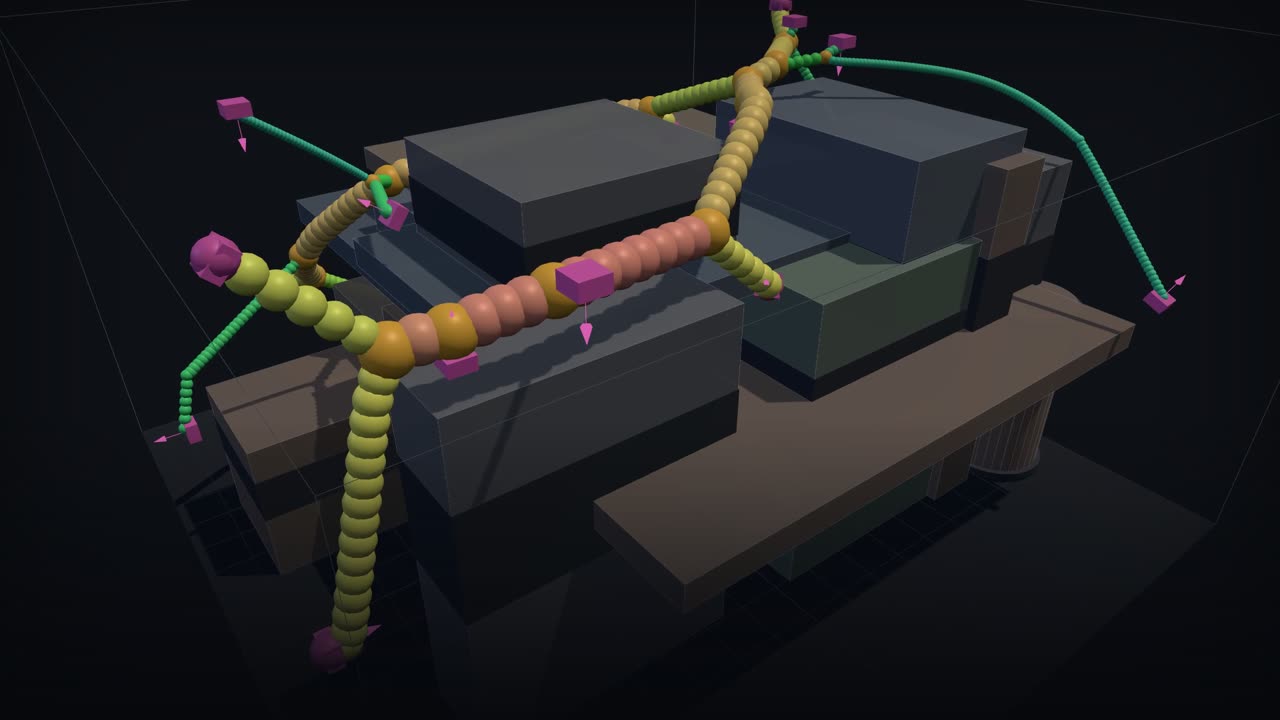
Thirty years ago I taught a team of AI agents to design things with a human.
This is my PhD dissertation, rebuilt so it runs in a browser tab. The window above is not a video. Creators, mutators and combinors are trading designs on a shared blackboard right now, and the harness you see is the best one they have found so far.
The thesis asked a simple question. Can a designer and a set of autonomous agents, working through a shared workspace, solve an engineering problem that neither could solve alone? The test case was routing cable harnesses through crowded 3D spaces, because it is hard, it matters, and it is easy to see when an answer is good.
The system was called CALIBER. It routed harnesses with up to sixty connectors and hundreds of wires, and designers at Lockheed tried it on real projects. Their early feedback: harness design time dropped from months to a few hours.
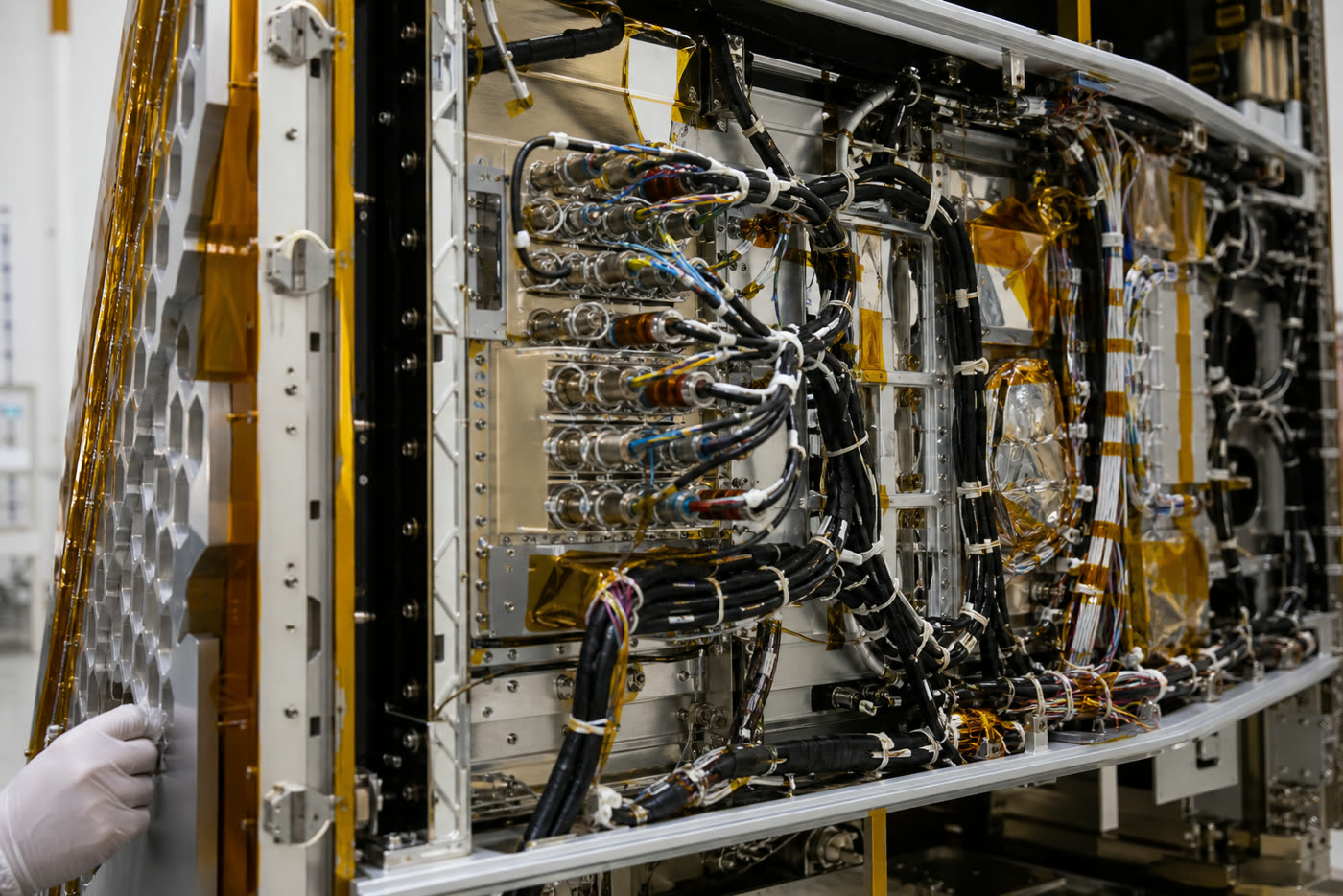
Aerospace harnesses, and why they took weeks
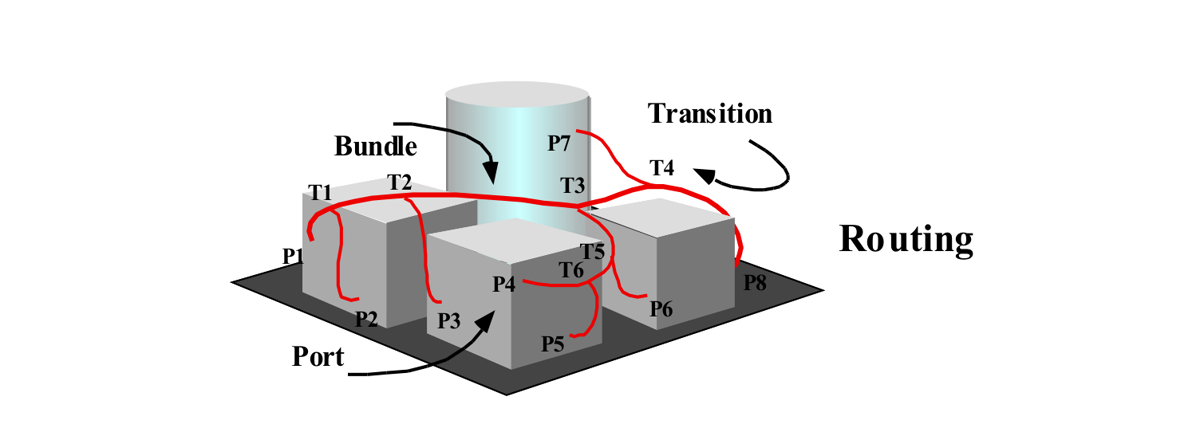
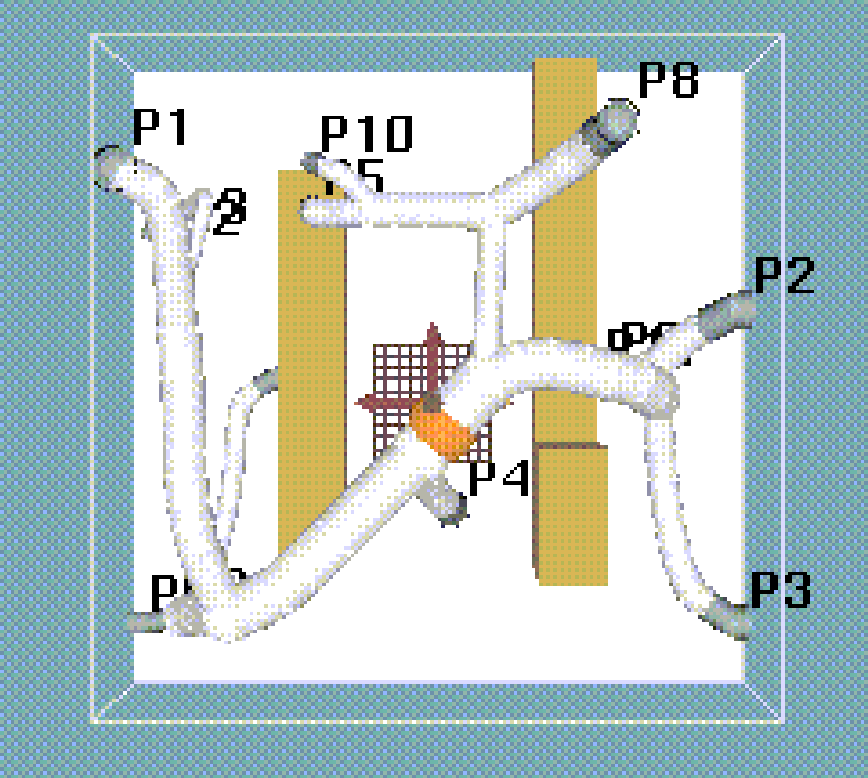
A harness is a tree. Wires leave a connector, travel together in a bundle, split at a transition, and fan out to other connectors. A bundle of many wires costs far less per wire than wires run alone, so the whole game is deciding where to merge and where to split.
In the 1990s a re-route took weeks. The electrical requirements, the box geometry and the layout were all committed before anyone looked at the cables. Designers padded enclosures with extra clearance and hoped. My advisor Mark Cutkosky and I wanted the harness in the loop early, when the boxes could still move.
The plan after graduation was to make CALIBER a product for aerospace harness designers. The web arrived at the same time and I went that way instead. The ideas kept working, though. Search with a team of specialists, keep a human in the loop, share partial solutions on a blackboard. That is still how I build.
Four steps, all visible in the window above
The Demo tour walks through them in order. In the full-screen simulator, Configure opens a Layers card that switches each of them on and off.
Map the free space
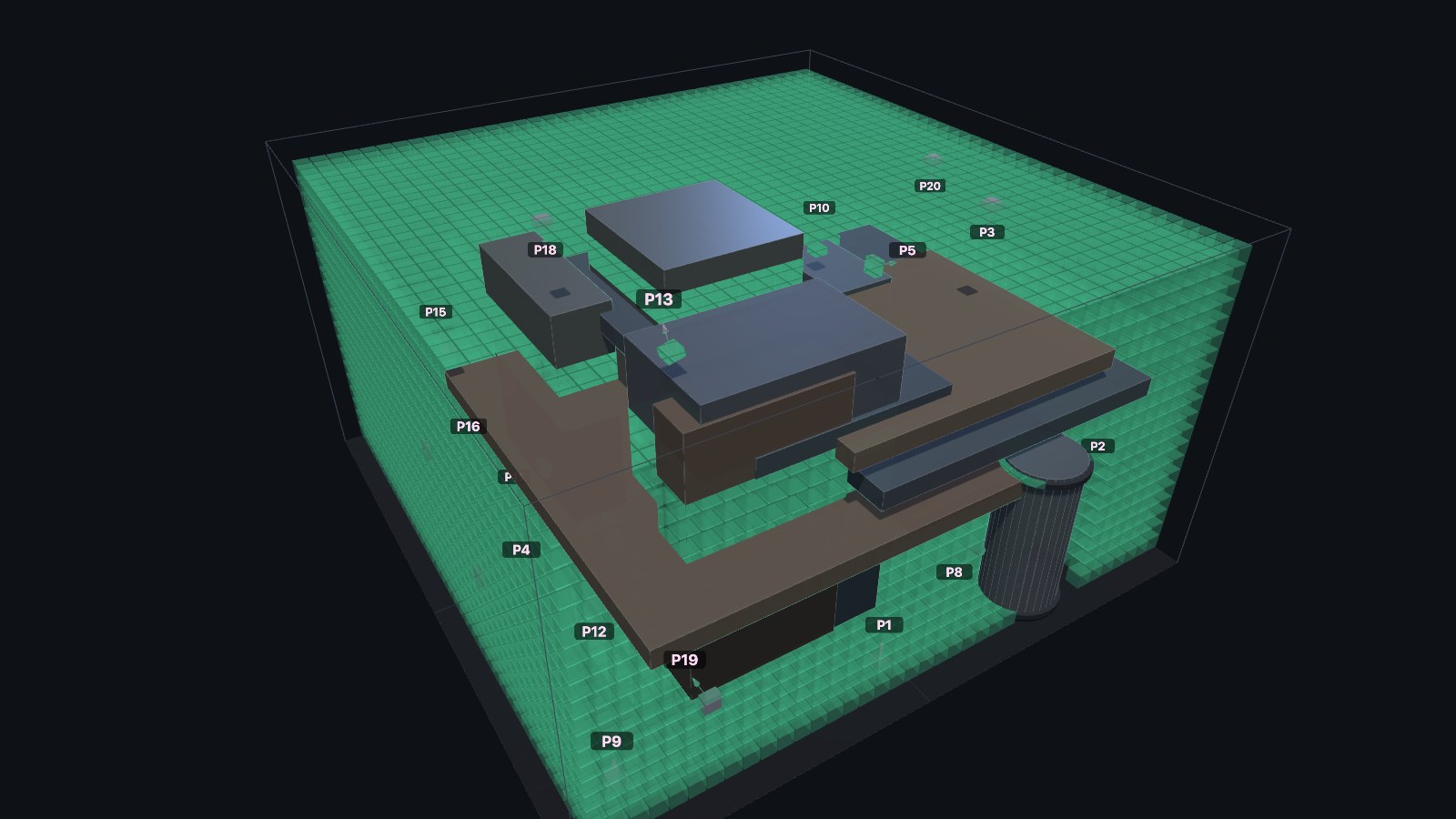
The enclosure becomes voxels. A wavefront grows out from every obstacle and wall, one shell at a time, recording how far each voxel is from anything solid.
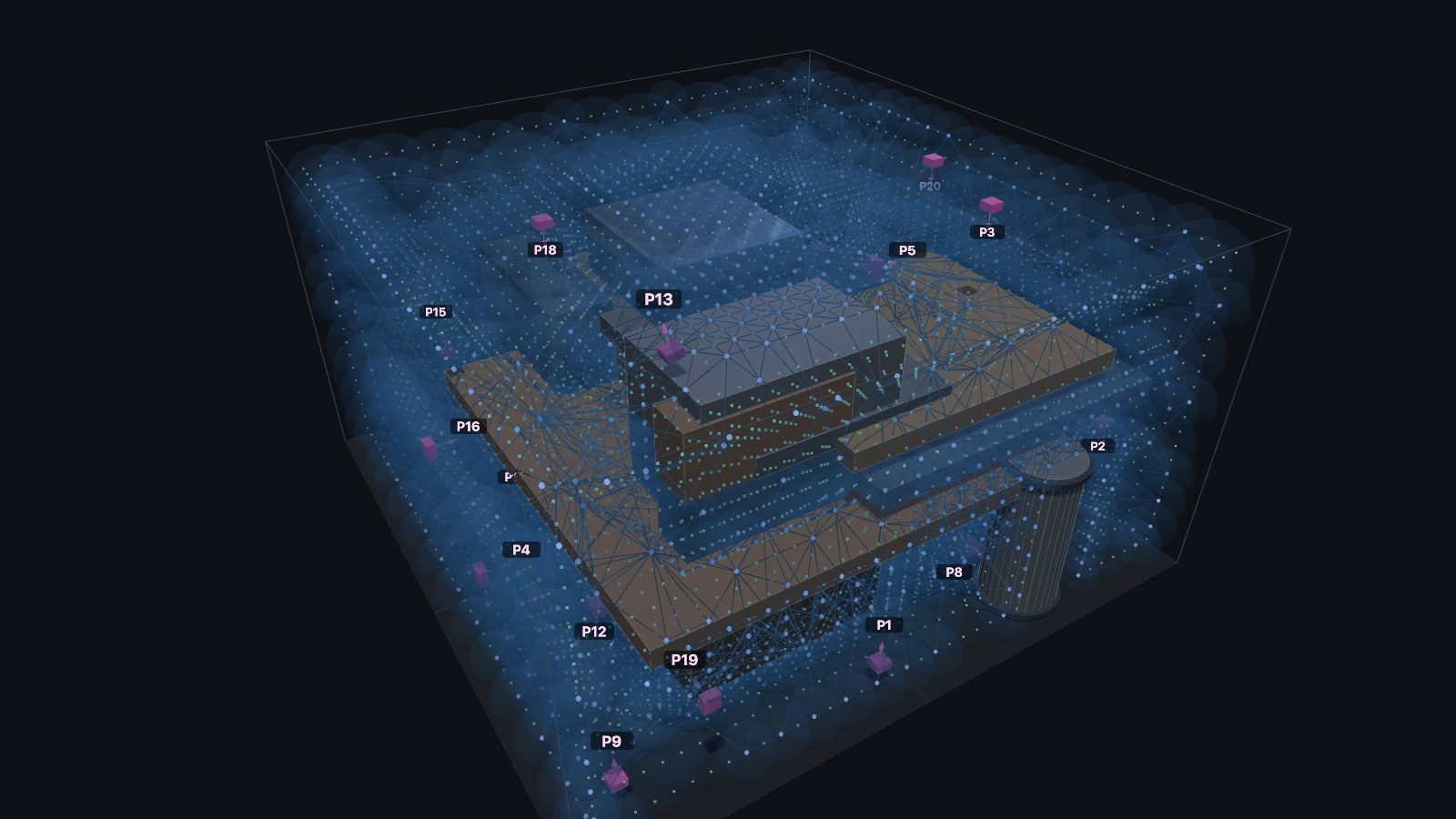
Find the corridors
Where wavefronts collide is the medial axis: the middle of every corridor. Maximal spheres along it, linked where they overlap, make a sparse graph the agents can search fast.
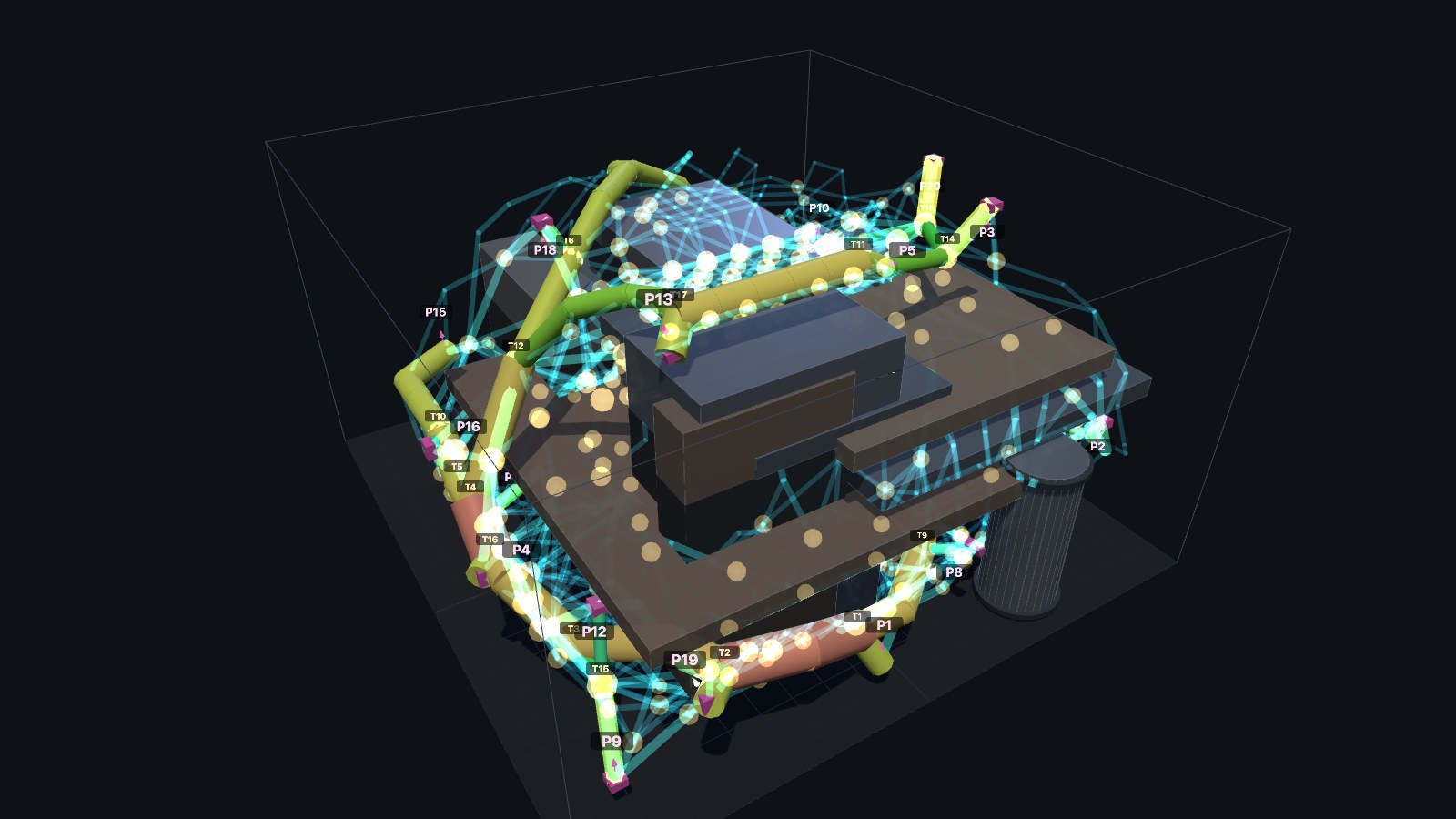
Let the agents argue
Creators invent topologies. Mutators move branches. Combinors graft the good half of one design onto another. All of them trade through one design pool. The cloud is every idea in play.
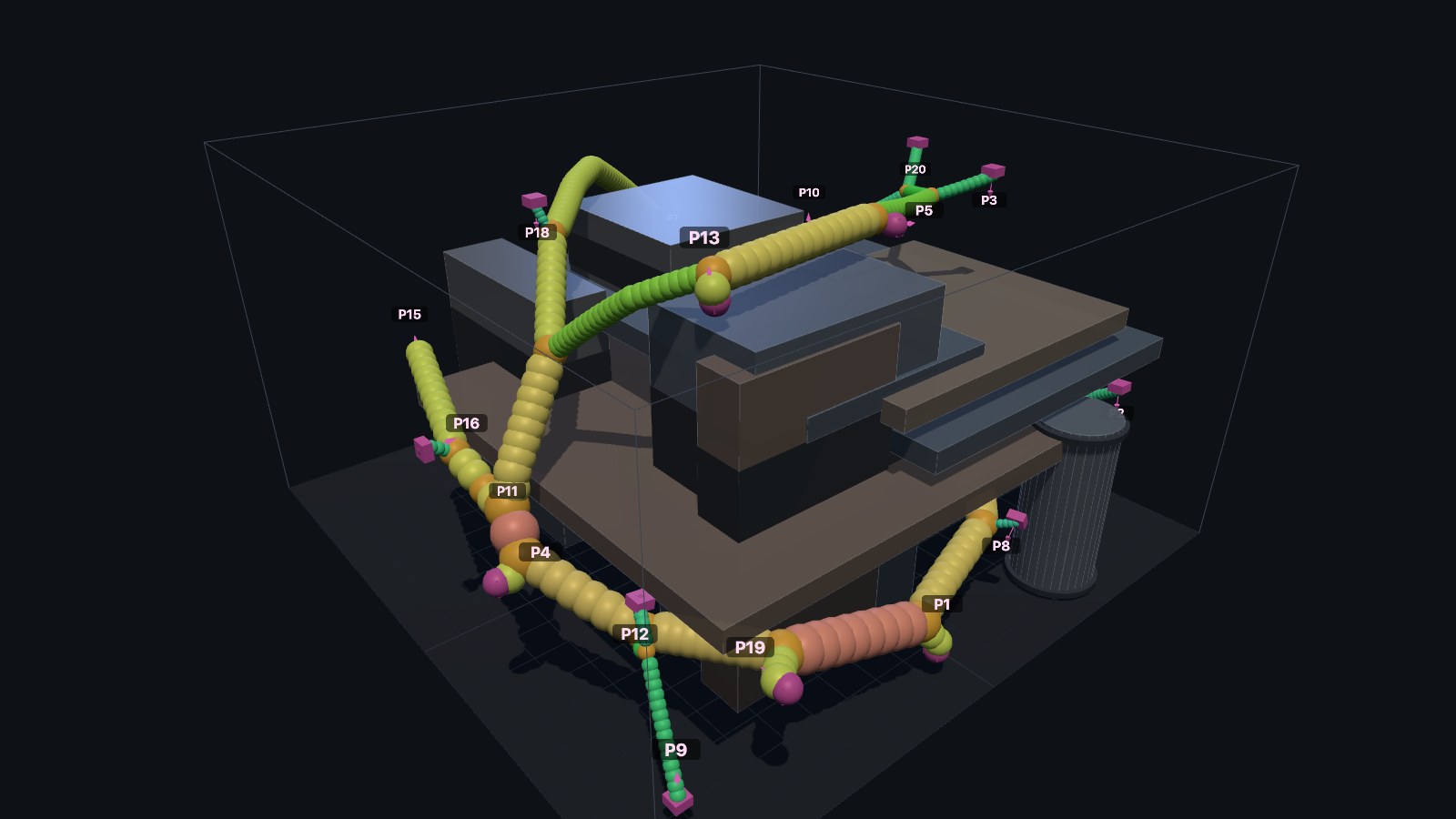
Hand it to the human
The best design becomes a physical harness: spheres on springs, with tension, bending and obstacles pushing back. Grab a bundle and pull. Cut a branch and re-attach it. Then hand it back to the agents.
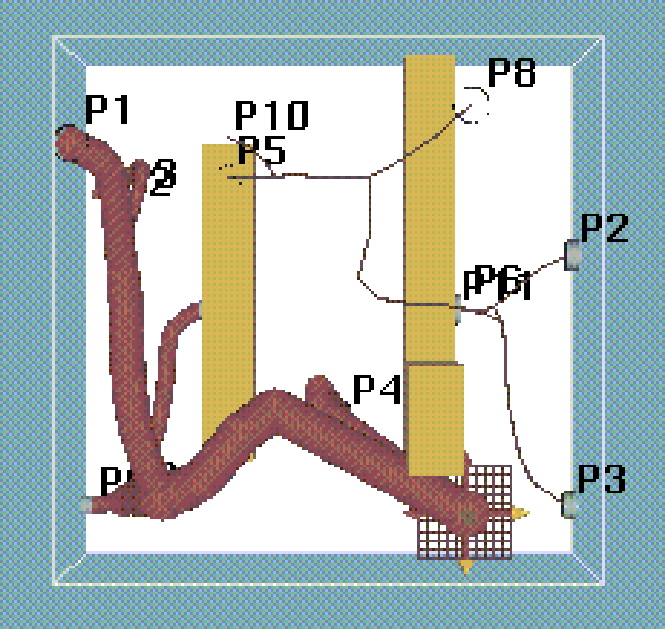
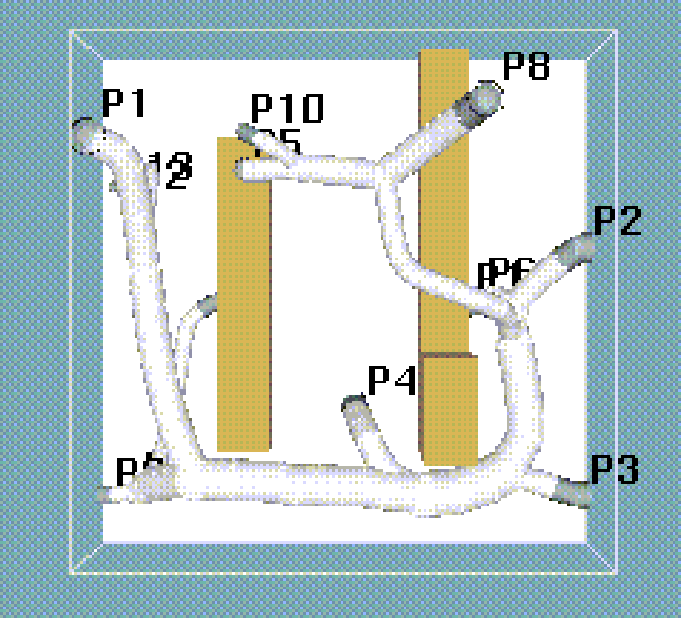
The same machine grows trees, rivers and lightning
A harness is a Steiner tree with economies of scale on its trunks. So is a telephone network, a transit map, a river basin, a lung. In 1997 the thesis closed with a note that the same agents should work in other routing domains. Now they do. Pick one from the strip on the right of the live view, or click a card below. Nothing changes but the scenery and the words. The agents, the cost model and the physics are the ones from the thesis.
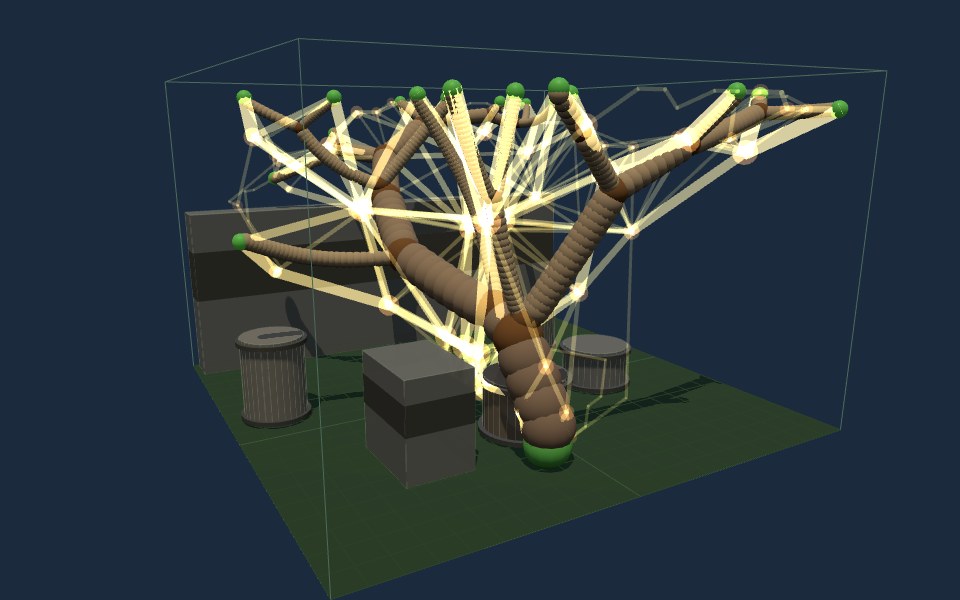
🌳 Tree
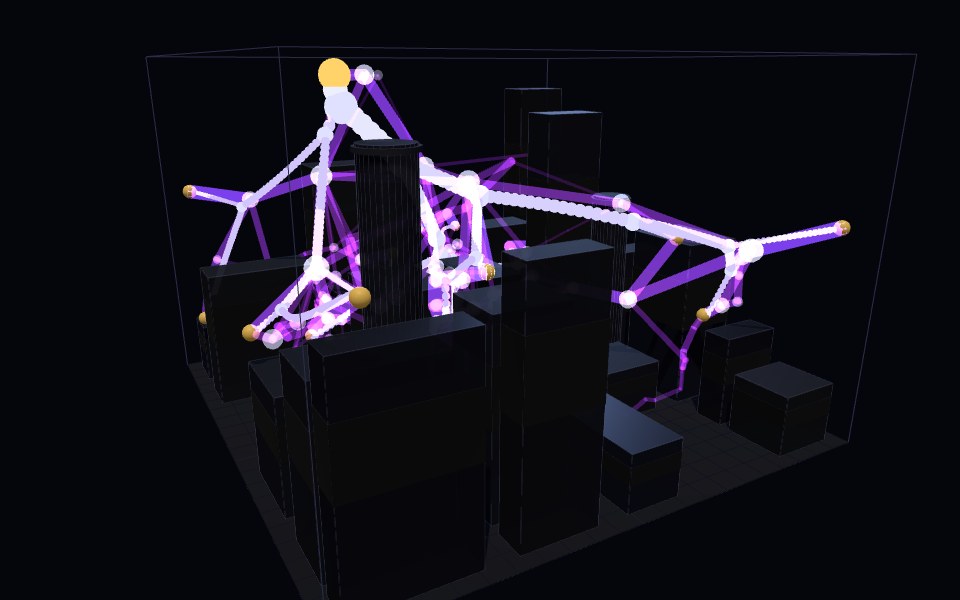
⚡ Lightning
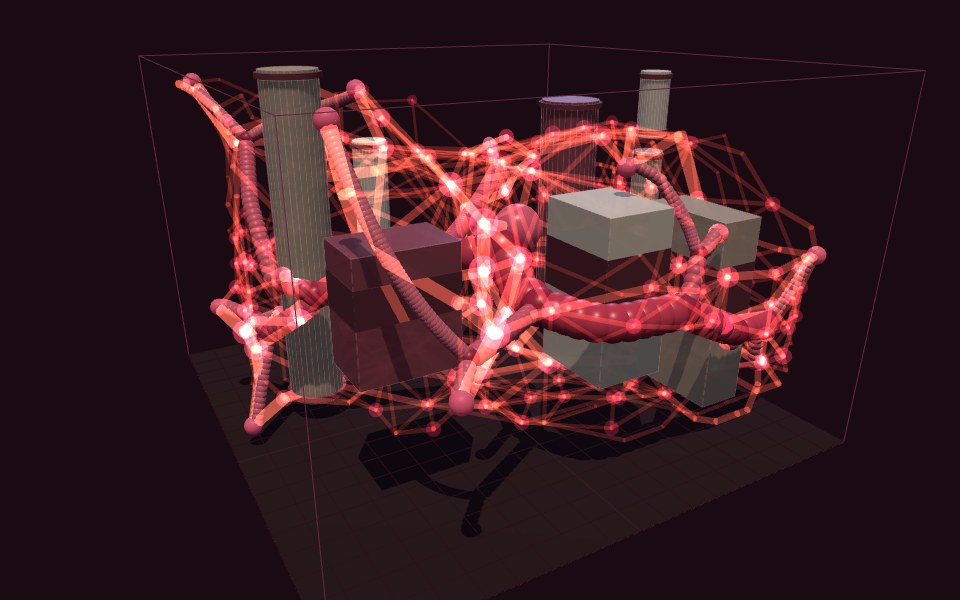
🫀 Blood vessels
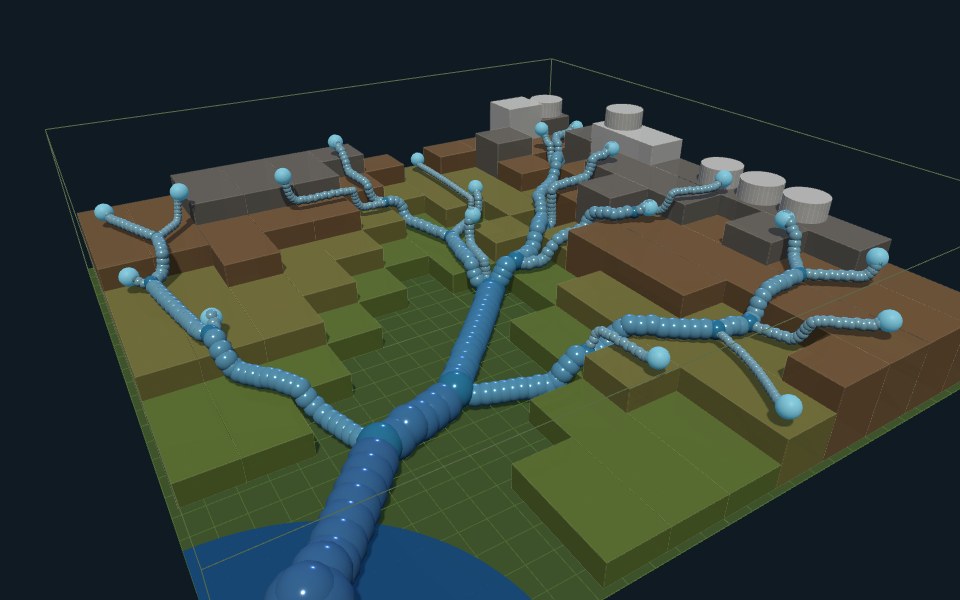
🏞 River basin
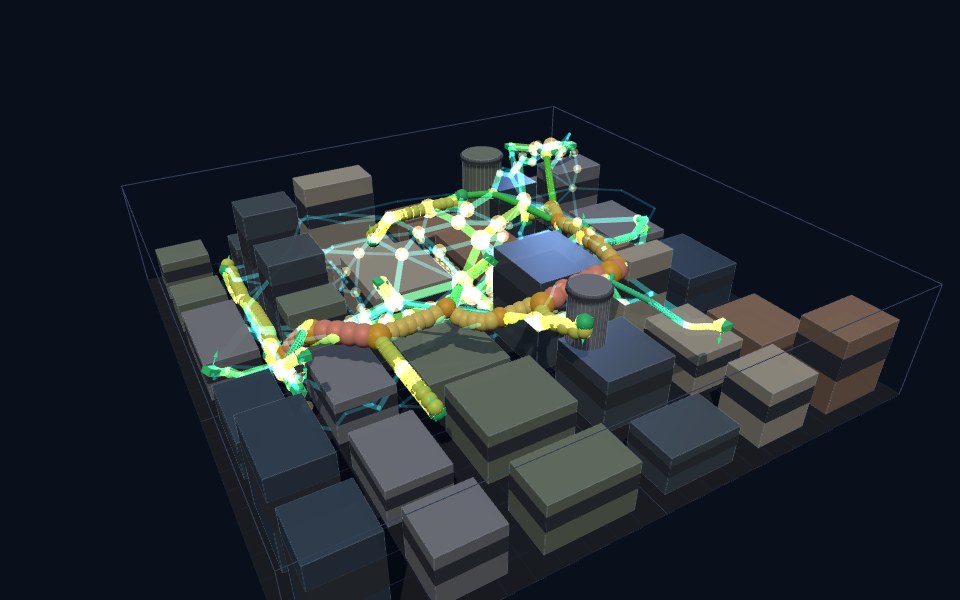
🏙️ City streets
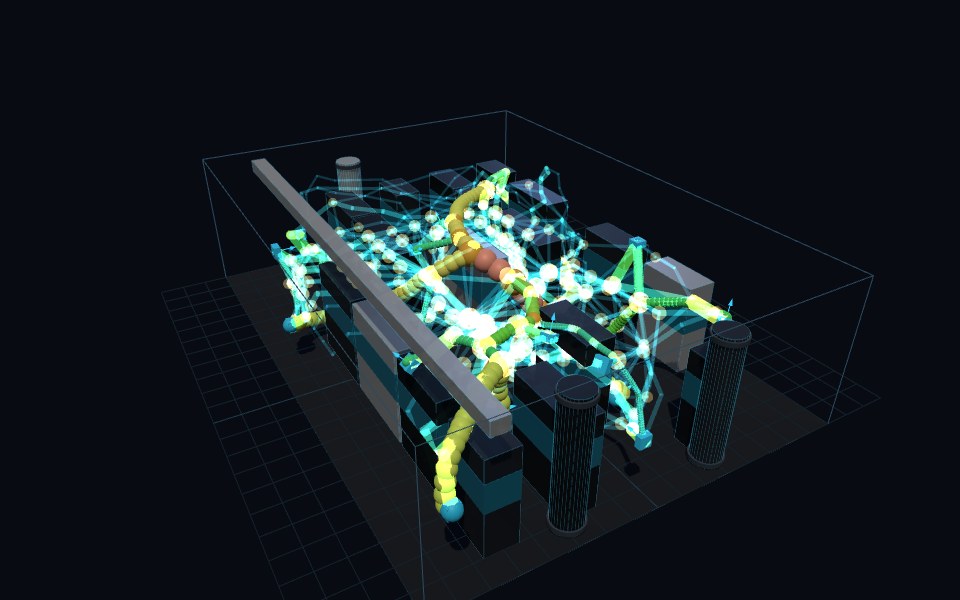
🖥 Data centre
🔌 Cable harness
Together beat either alone
A human working with the agents found better harnesses, faster, than the human alone or the agents alone (Section 7.4.3). No single agent was best in every situation. The team was.
Three ideas carried the result, and I still use all three.
- Decompose. Break the problem into pieces that purpose-built agents can own.
- Share. Every agent, including the human, reads from and writes to one design pool. No protocol. No hand-offs.
- Evolve. Keep what works, recombine it, and let the human steer when the metrics cannot see what matters.
The dissertation is 204 pages: the routing problem and its search space, the environment representations, the blackboard, each agent, the designer's interface, and the experiments. It is readable, and the figures still hold up.
Andrew B. Conru. Computational Support for the Collaborative Design, Routing and Manipulation of Cable Harnesses. PhD dissertation, Department of Mechanical Engineering, Stanford University, February 1997. Advisor: Mark Cutkosky. Supported by the NSF.